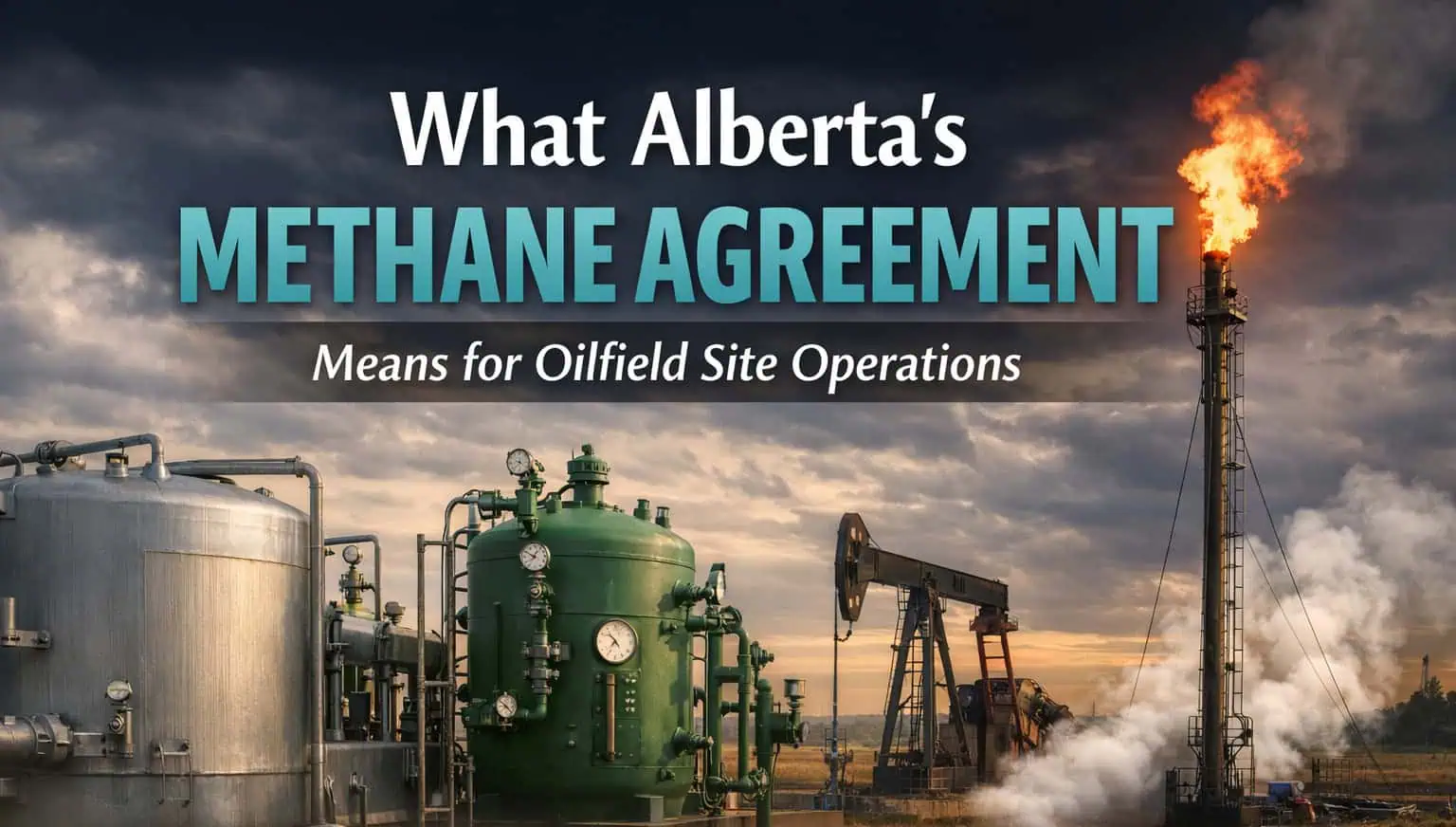
Alberta and Ottawa have reached an agreement in principle on methane equivalency, and that matters for oilfield site operations across the province. While this is not yet the final completed agreement, it signals the direction of travel clearly - Alberta and the federal government are working toward a framework where provincial rules remain the primary operating reality in Alberta, with a shared emissions-reduction outcome in view.
According to the federal agreement-in-principle page, the next steps include a draft equivalency agreement later in 2026, a 60-day public comment period, and a final agreement targeted by the end of the year. Alberta has also published an official path forward document that provides additional context on how the province says it plans to implement the Alberta-Canada methane agreement.
For operators, that does not mean a sudden rule change overnight. What it does mean is that methane performance, venting control, fugitive emissions, and combustion efficiency will remain central operational issues in the years ahead. That makes field equipment decisions more important, especially when planning temporary production, testing, early production, maintenance, and short-term site setups.
What happened in Alberta's methane agreement?
Canada and Alberta announced an agreement in principle intended to support a new methane equivalency framework for Alberta’s upstream oil and gas sector. The broad direction is toward a 75% reduction in methane emissions from 2014 levels by 2035, while allowing Alberta to continue acting as the main regulator for upstream methane requirements within the province.
In practical terms, this means Alberta operators are not looking at an immediate overnight regulatory reset. However, the announcement reinforces a long-term direction: upstream operations will continue to face pressure to control venting, reduce leaks, and manage combustion performance more effectively.
Important note: This is an agreement in principle, not the final completed equivalency agreement. Operators should continue monitoring official Alberta and federal updates as the draft and final agreement process moves forward.
What this means for oilfield site operations
Methane emissions in upstream oil and gas operations can come from intentional venting, unintentional equipment leaks, and inefficient burning. That means the operational response is not just about paperwork or regulation - it is about how sites are configured and how equipment is selected, deployed, and managed in the field.
For many oilfield jobs, especially temporary and transitional scopes, operators need practical setups that help them keep operations moving without overcommitting capital. This is where rental equipment can make sense. A well-planned temporary site package can help support safer and more controlled handling of gas and liquids while the operator evaluates production, gathers data, waits for tie-in, or manages a short-term program.
- Temporary production and early production before permanent infrastructure is in place
- Well testing and flowback where operating conditions may change quickly
- Maintenance turnarounds and short-duration projects where flexibility matters
- Situations where operators want to avoid overbuilding too early or tying up unnecessary capital
The broader takeaway is simple: as methane policy evolves, site control matters more. Operators will keep looking for practical ways to reduce unnecessary releases, manage vapours and liquids properly, and use field equipment that fits the actual scope of the work.
Does Alberta's methane agreement affect vapour-tight tanks, separators, knockouts, and flare stacks?
Indirectly, yes.
The agreement does not say that one specific rental product now becomes mandatory. But it does reinforce the importance of well-site equipment that supports more controlled operations. For temporary setups, testing programs, and early production, that can bring more attention to how tanks, separators, knockouts, and flare systems are selected and configured.
Vapour-tight tanks
Vapour-tight tank rentals fit naturally into the broader conversation around more controlled site operations. When operators are managing temporary production or fluid storage, vapour-tight configurations can support a more contained setup than loosely managed temporary handling approaches.
Separators
Separator rentals matter because separation is often a key part of preparing flow streams for downstream handling. When gas, liquids, and production conditions need to be managed carefully, the right separator setup can be central to an orderly temporary site package.
Knockouts
Knockout rentals play an important support role where liquids need to be removed before gas reaches downstream equipment. In temporary flaring and related applications, that can be an important part of a cleaner and more stable operating setup.
Flare stacks
Portable flare stack rentals are closely tied to the methane discussion because methane emissions policy directly intersects with combustion performance and the handling of produced gas. Where temporary flaring is required, properly planned flare-related equipment remains part of the operational picture.
So while the agreement is not a product-specific rule, it does increase the relevance of controlled temporary production packages and related rental equipment. The more operators focus on emissions performance and site efficiency, the more equipment selection becomes part of the conversation.
Why this matters for Alberta operators right now
Even before any final agreement is completed, this announcement provides an important signal. Alberta and Ottawa are trying to avoid duplicative federal and provincial methane rules in Alberta while still pursuing a shared emissions outcome. For operators, that kind of direction helps reduce uncertainty.
And when uncertainty comes down, planning becomes easier. Companies can think more clearly about what they need for testing, temporary production, early production, maintenance, and short-term site work. In many of those situations, rentals can help bridge the gap between operational urgency and long-term facility decisions.
That is especially true where project conditions may change. If production volumes, fluid characteristics, or timing shift, rental-based site equipment often gives operators more flexibility than locking into permanent equipment too early.
Need a temporary equipment package for Alberta oilfield operations?
OSY Rentals supplies vapour-tight tanks, separators, knockouts, and flare stacks for temporary and transitional oilfield operations across Alberta and Western Canada. If you are planning testing, early production, maintenance work, or a short-term site setup, we can help you discuss the right rental package for the job.
Final thought
Alberta's methane agreement in principle does not create an overnight equipment rule change. But it does point in a clear direction - operators will continue working in an environment where controlled site operations, emissions performance, and practical field execution all matter.
That is why equipment choices around temporary production, separation, liquid handling, and flaring are not just logistical decisions. Increasingly, they are part of how operators manage efficiency, flexibility, and operational discipline on site.
